Private plane cost William P. Hobby
A private plane cost William P. Hobby quote depends on aircraft category, passenger count and how long the jet sits in Houston. HOU sits 46 feet above sea level, which keeps summer takeoff performance tame. Hobby's six FBOs give you real choices on where the car pulls up.
- Start
- Airport info
- William P. Hobby Airport
- KHOU · HOUfield codes
- 46 ftairfield elevation
- 7,602 ftlongest strip
- 0 mito New York
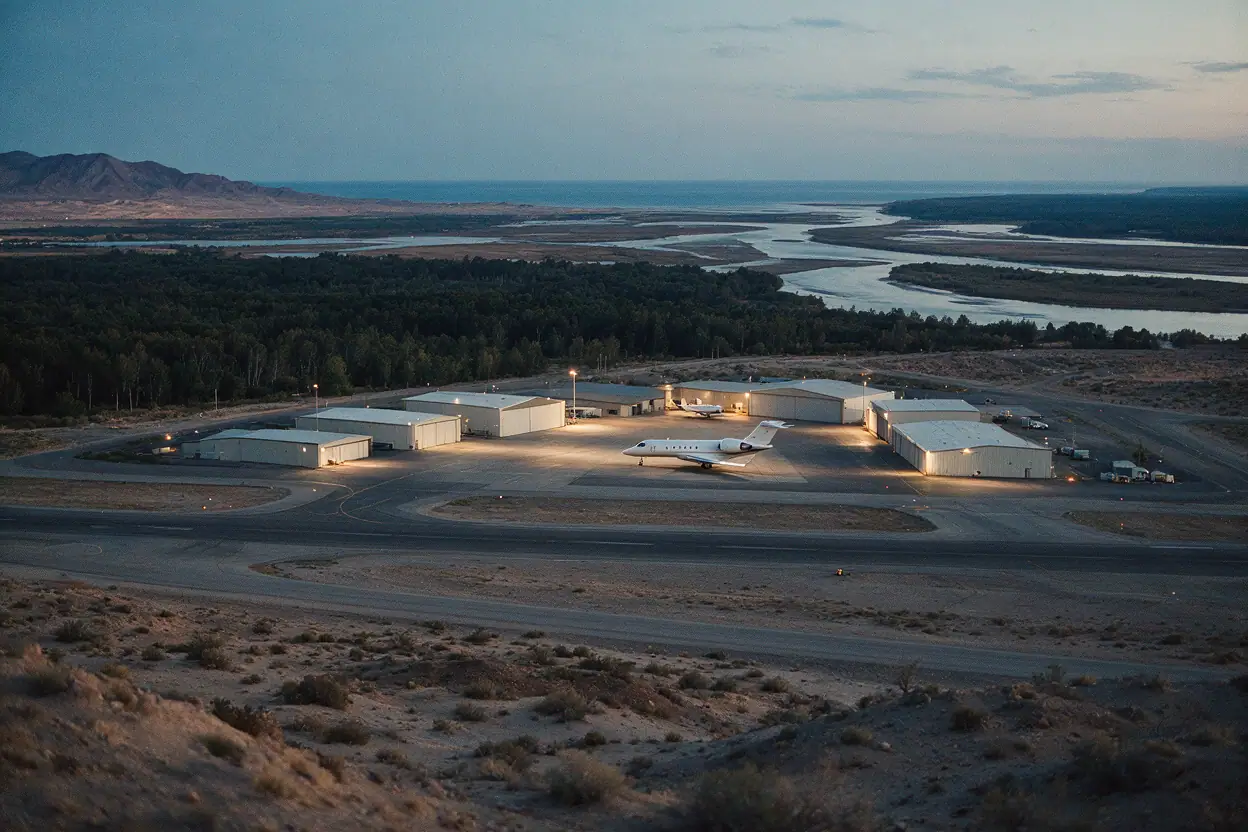
Hobby is Houston's close-in field, minutes off I-45 and the Gulf Freeway, and it is the airport most passengers mean when they say they want to land near downtown rather than out at Bush. The field sits at 46 feet above sea level, low enough that summer heat rarely forces the payload decisions you fight at mountain airports. For anyone pricing a private charter into or out of Houston, that low elevation is one of the quiet reasons the numbers hold up well in July.
A private plane cost William P. Hobby quote moves mostly with aircraft category and passenger count rather than with the field itself. A light jet seating six to eight, a midsize with a stand-up cabin, and a large-cabin aircraft crossing the country each carry their own hourly range, and quotes swing further on positioning, crew duty and how long the aircraft waits on the ramp. Ask for the estimate in writing and in total, so fuel, landing and handling fees are baked in rather than added at the end.
Where Hobby differs from a big international gateway is choice on the ground. Six FBOs at William P. Hobby Airport give charter flights real options on where to park, and a closer ramp can cut the drive from the curb to your meeting. Tell the planner your destination address rather than just "downtown Houston" and the FBO choice can follow from that.
Heat, humidity and density altitude
Hobby's hottest months push density altitude to about 2,200 feet in July, well short of the roughly 2,700-foot peak the field reaches in its worst heat. That is a modest penalty for a jet, but it still matters on a full-cabin departure with a long leg ahead. Summer density altitude at William P. Hobby Airport peaks near 2,700 feet, low enough for most jets to depart full, though light jets on the longest legs may still face a fuel stop. August averages 91 F with 17 wet days, so afternoon thunderstorms can delay a departure more often than heat limits the aircraft. If your trip is built around a morning meeting downtown, then a morning departure dodges both the heat and the storm build-up. Winter is gentle here: January highs average 63 F and density altitude drops to about 300 feet, so cold-weather performance is rarely a constraint.
| Mo. | Mean high | Precip. days | Effective altitude |
|---|---|---|---|
| Jan | 63°F | 11 | 300 ft |
| Feb | 67°F | 13 | 600 ft |
| Mar | 73°F | 13 | 1,000 ft |
| Apr | 78°F | 15 | 1,300 ft |
| May | 84°F | 16 | 1,700 ft |
| Jun | 89°F | 16 | 2,100 ft |
| Jul | 91°F | 16 | 2,200 ft |
| Aug | 91°F | 17 | 2,200 ft |
| Sep | 87°F | 15 | 1,900 ft |
| Oct | 81°F | 10 | 1,500 ft |
| Nov | 72°F | 11 | 900 ft |
| Dec | 67°F | 11 | 600 ft |
Getting to and from the field
Hobby sits directly off I-45 and the Gulf Freeway, a short run to downtown and the Medical Center, which is why many Houston travelers prefer it to a longer haul from Bush. Arrivals at William P. Hobby Airport reach downtown Houston without the long transfer from the north side, and the six FBOs spread the traffic across the field. If your schedule is tight on the return, then confirm the FBO and the car in advance so the last hour is not spent circling a ramp.
Private jet routes via William P. Hobby
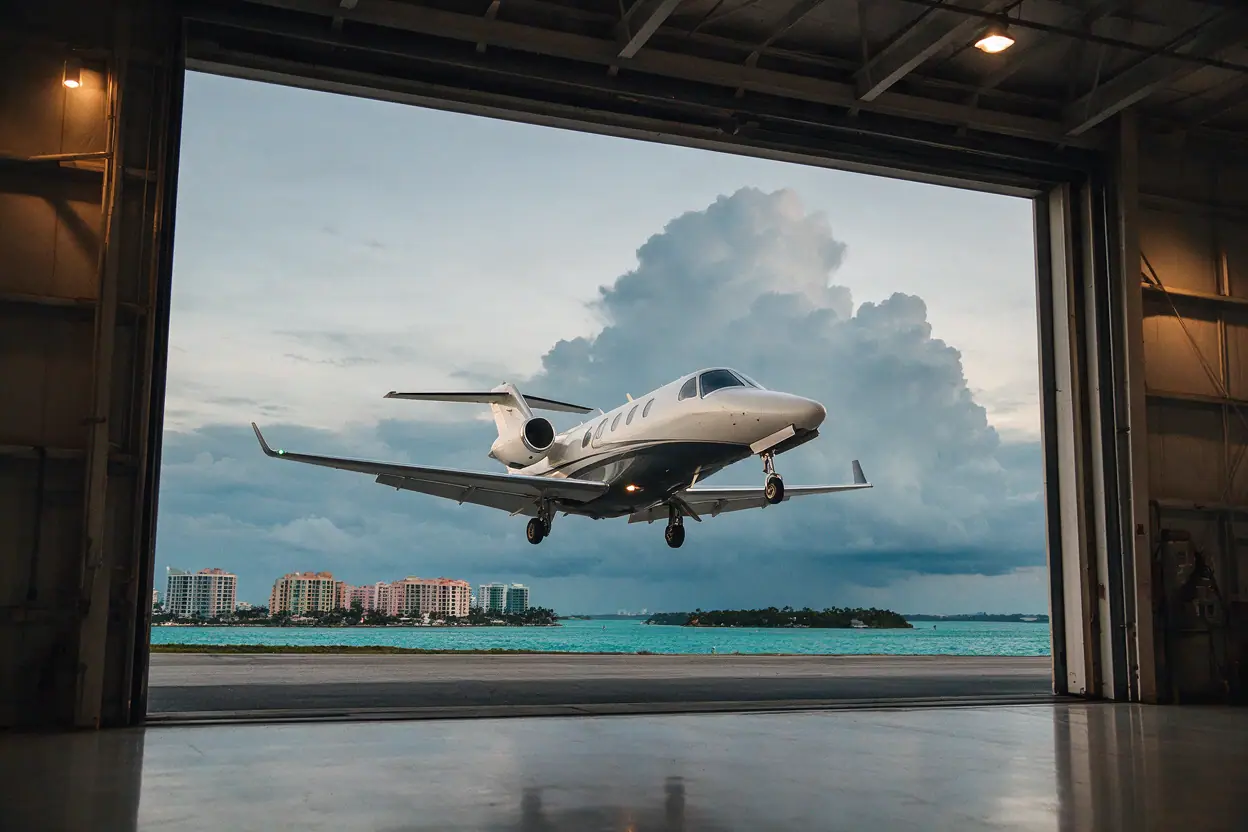
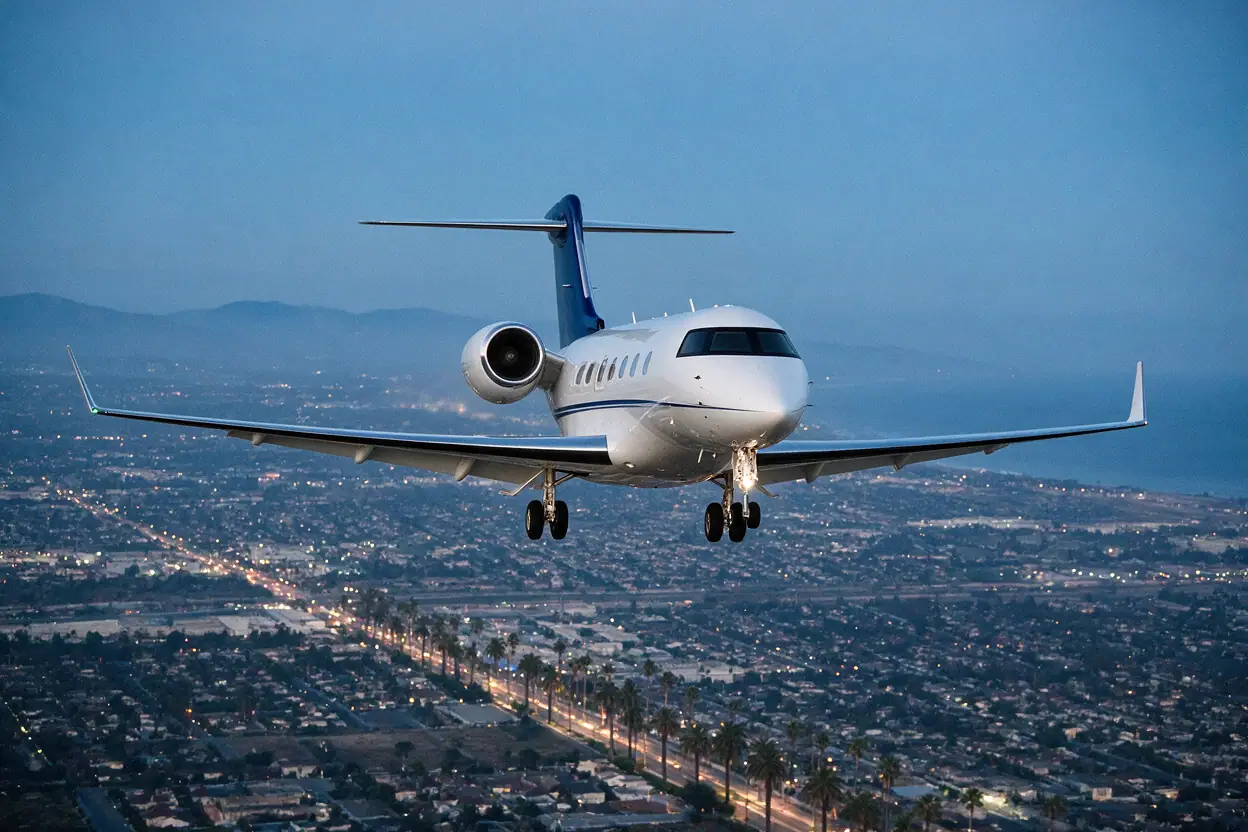
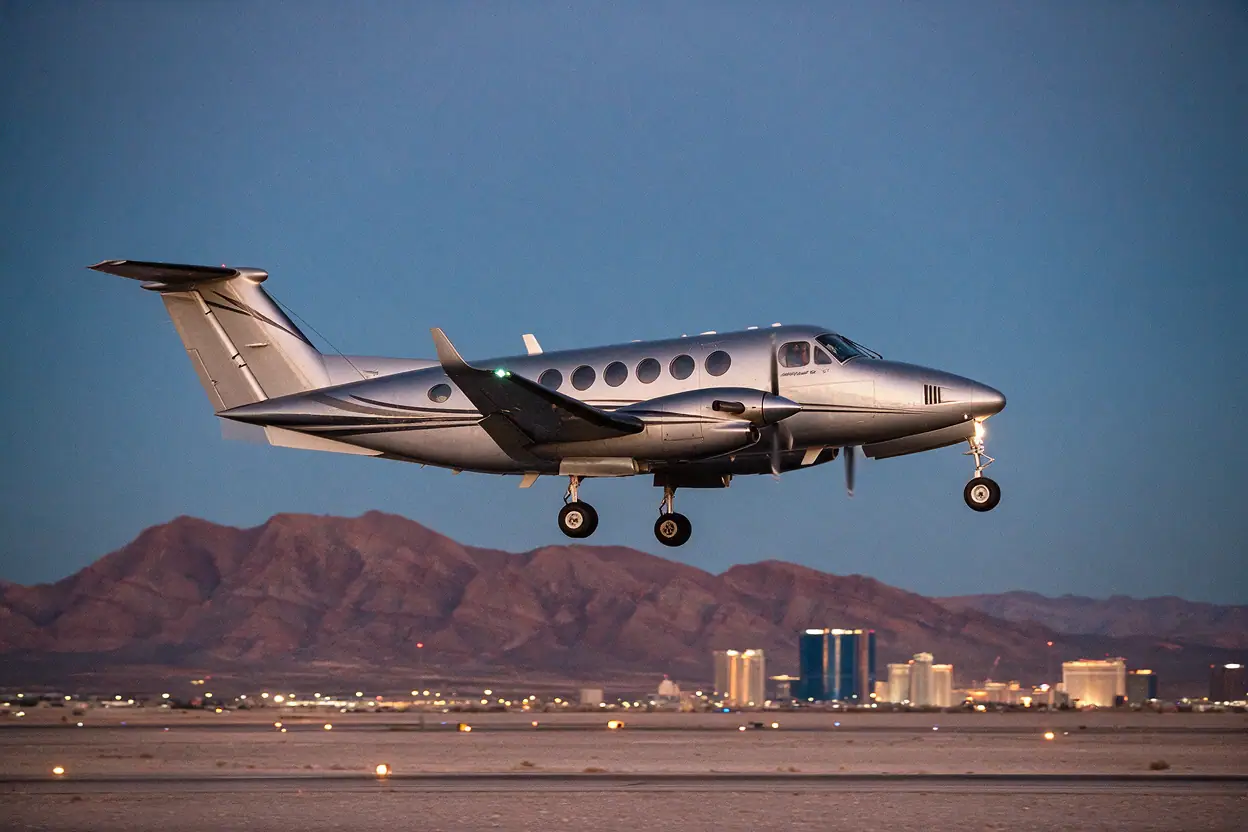
These 6 private jet routes span 199 to 2,129 nautical miles, with single-leg light jet estimates ranging $4,000 to $36,000.

Runways and field conditions at Hobby
Hobby's longest runway runs 7,602 feet, enough for the midsize and large-cabin jets that dominate Houston charter demand, though very long nonstop legs still favor a bigger field. The airfield sits at 46 feet, so the runway length you actually need here is driven by weight and temperature, not by climb-out terrors. If your trip is a coast-to-coast leg with a full cabin, then the planner will check takeoff distance against the day's heat before confirming a light jet.
| Rwy | Len | Wid | Sfc |
|---|---|---|---|
| 04/22 | 7,602 ft | 150 ft | Concrete |
| 13R/31L | 7,602 ft | 150 ft | Asphalt |
| 13L/31R | 5,148 ft | 100 ft | Concrete |
FBO choices on the field
Six FBOs serve Hobby: Wilson Air Center, Million Air Houston, Jet Aviation Houston, Atlantic Aviation, Signature Aviation and Henriksen Jet Center. Which one your flight uses depends on the aircraft and the ramp arrangement, and your quote should name it rather than leave the arrival point vague. Wilson Air Center and Million Air Houston are two of the six FBOs serving charter flights at HOU, so ask which one your jet is booked into and plan the car from there. If you are meeting a group arriving on separate flights, then picking one FBO as the meeting point saves a round of phone calls.
What Hobby suits best
- Business travel to downtown Houston, the Texas Medical Center and the Energy Corridor, where the drive from Hobby is shorter than from Bush.
- Light and midsize jets on regional legs across Texas, Louisiana and the Southeast, where the 7,602-foot runway is more than ample.
- Groups flying into Houston for galas, rodeo season and football weekends, using one FBO as a single meeting point.
- Travelers who want a close-in field with several FBO options rather than a long transfer from a distant airport.
| Cabin size | Runway needed | Local |
|---|---|---|
| Turboprop | 3,300 ft+ | Suits the aircraft |
| Light jet | 4,000 ft+ | Suits the aircraft |
| Midsize jet | 5,000 ft+ | Suits the aircraft |
| Super-midsize jet | 5,200 ft+ | Suits the aircraft |
| Heavy jet | 5,600 ft+ | Suits the aircraft |
Queries about this field
What does a private plane cost William P. Hobby for a typical flight?
There is no single figure, because a private plane cost William P. Hobby quote depends on aircraft category, distance and wait time. A light jet on a short regional leg prices far below a large-cabin aircraft crossing the country, and positioning, crew duty and ramp time move the number again. Ask for a written total that includes fuel, landing and handling, and treat it as an estimate rather than a fixed fare.
Which jets can use Hobby's runway?
Hobby's longest runway is 7,602 feet, which comfortably handles light, midsize and large-cabin jets on most missions. The field sits at 46 feet, so density altitude is mild: about 2,200 feet in July and near 2,700 feet at peak. If a long nonstop leg with a full cabin is planned, then the planner will confirm takeoff distance for that specific aircraft and day.
How hot does it get at Hobby in summer, and does it affect my flight?
July and August highs average 91 F, with 16 and 17 wet days respectively, and density altitude reaches around 2,200 feet. That is rarely a hard limit for jets. If an afternoon departure coincides with a storm build-up, then delays are more likely from weather than from heat, so a morning slot is the safer booking for a same-day meeting.
Which FBO will my charter use at Hobby?
Six FBOs serve the field: Wilson Air Center, Million Air Houston, Jet Aviation Houston, Atlantic Aviation, Signature Aviation and Henriksen Jet Center. Your confirmation should name the one your flight uses. If you are coordinating several arrivals, then choosing one FBO as the meeting point keeps the group together and simplifies car pickup.
Is Hobby a good alternative to Bush for Houston arrivals?
Yes for many trips, because Hobby sits off I-45 and the Gulf Freeway, closer to downtown and the Medical Center than the north-side field. The trade-off is runway length at 7,602 feet, which suits most charter aircraft but not every ultra-long-range mission. If your trip is regional or your meeting is downtown, then Hobby is usually the more efficient arrival point.
When should I book a charter into Hobby?
Earlier is better for peak periods, especially Houston rodeo season, football weekends and the summer storm months. Availability tightens when several large events overlap, and aircraft positioning from another city adds cost. If your dates are fixed, then book once the schedule is firm and confirm the FBO at the same time, so the ground plan is set before the trip week begins.