Small private plane cost to fly
Small private plane cost turns on aircraft class and route length. On a 279 nm hop, a light jet runs $4,000 to $6,000 one way in 2026. Turboprops and light jets are the two budget entry points.
- Start
- Small private plane cost
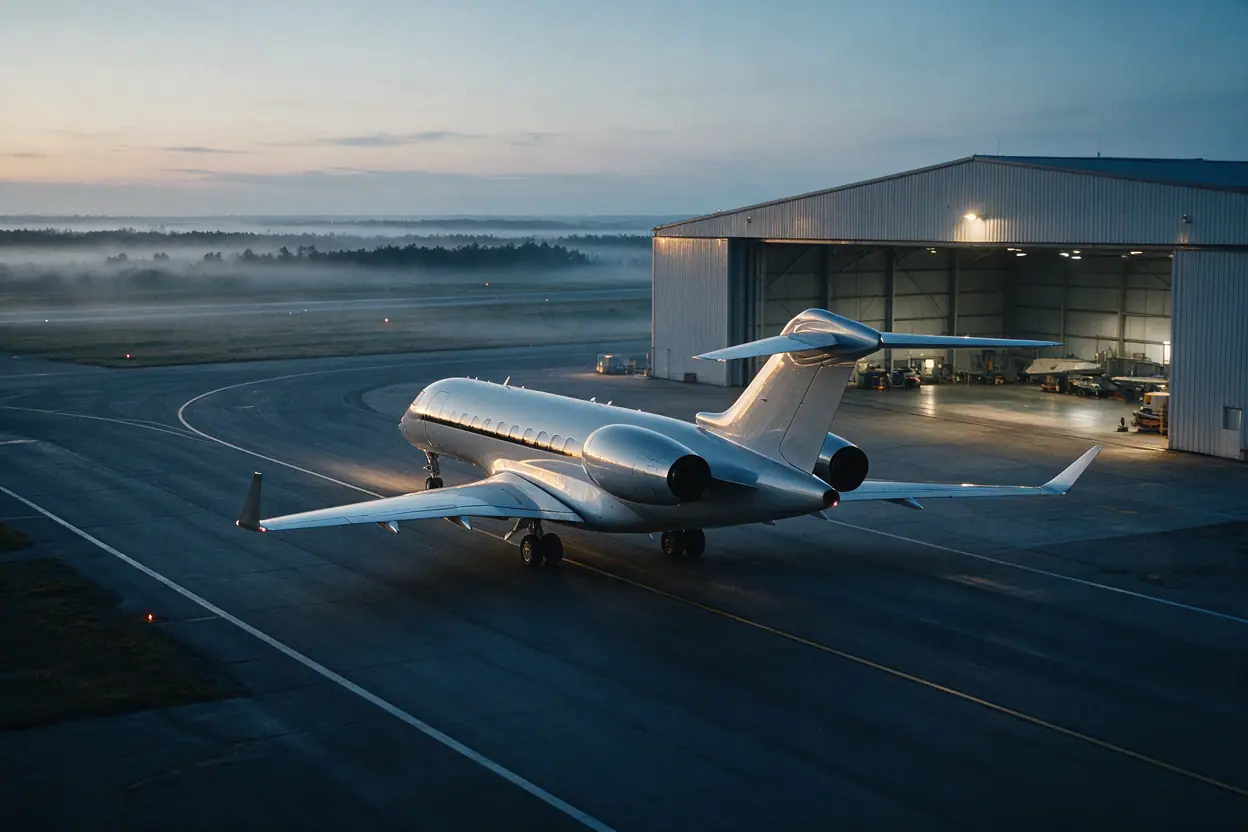
This guide answers the small private plane cost question with aircraft-class hourly ranges and route examples pulled from the same data set. Every figure here is an estimate until an operator confirms it on your specific date, so treat the numbers as planning benchmarks rather than quotes.
The page covers turboprops and light jets first because that is where the small plane market actually lives, then explains when those hourly figures tip toward ownership and when charter spend stays lower. Airport and season conditions that change the price are called out where they matter.
Small private plane cost by class
Small private plane cost starts with hourly rates: turboprops run $2,200 to $3,500 per hour and light jets $3,800 to $5,800 per hour, before fees. The ranges overlap, so the low-end difference between the classes is $1,600 an hour and the high-end difference is $2,300 an hour. A turboprop cruises at 300 knots and a light jet at 430 knots, so the cheaper hour buys a slower trip; a small aircraft hourly range sets the floor for every private charter quote. On a 200 nm hop the difference is small, and on a 900 nm leg it is not.
The table below shows both classes on six short routes, and it makes the crossover easy to see. The turboprop saves money on a short hop while the light jet saves time on a longer flight; on Los Angeles to Las Vegas (199 nm) the turboprop is $2,200 to $3,500 against $4,000 to $6,000 for the jet, and the jet saves about 13 minutes. On New York to Miami (949 nm) the two classes land within roughly $2,000 to $2,500 of each other because the jet's speed cuts 3h 37m to 2h 37m. If your priority is the lowest dollar figure, then the turboprop wins on every short hop in the table; if the schedule matters more, the jet's hour is the one to price.
Turboprop and light jet estimates
The table below compares turboprop and light jet flight times and one-way estimates on six short routes, using 2026 charter data compiled for this guide. Read the two columns together: the turboprop is cheaper on every row, while the light jet saves time that grows with distance. These are planning figures, and an operator confirms the final price for your date, aircraft, and passenger count.
| Route | Distance | Turboprop | Light jet |
|---|---|---|---|
| New York to Miami | 949 nm | 3h 37m · $8,000–$12,500 | 2h 37m · $10,000–$15,000 |
| Los Angeles to Las Vegas | 199 nm | 1h 00m · $2,200–$3,500 | 0h 47m · $4,000–$6,000 |
| New York to Palm Beach | 902 nm | 3h 27m · $7,500–$12,000 | 2h 30m · $9,500–$14,500 |
| Los Angeles to San Francisco | 279 nm | 1h 17m · $3,000–$4,500 | 0h 59m · $4,000–$6,000 |
| San Francisco to Las Vegas | 359 nm | 1h 33m · $3,500–$5,500 | 1h 11m · $4,500–$7,000 |
| Denver to Aspen | 96 nm | 0h 38m · $2,200–$3,500 | 0h 32m · $4,000–$6,000 |
Flight time and one-way estimate per aircraft class.
Turboprops and light jets on short hops
A turboprop is the lowest-cost small plane class for routes under about 400 nm, and the Denver to Aspen run (96 nm) books at $2,200 to $3,500 one way. That is a 38-minute flight. Driving the I-70 corridor can take hours in ski season, which is why this route exists at all. A turboprop carries six to eight passengers at the lowest small private plane cost per hour. The trade is cabin size: a Daher TBM 960 seats six, a Beechcraft King Air 350i seats eight, and both have cabins around 4 to 5 feet tall.
A light jet such as the HondaJet Elite II seats five and cruises near 422 knots; the Cessna Citation CJ4 Gen2 seats seven and runs 451 knots. The same Denver to Aspen hop runs $4,000 to $6,000 in 32 minutes. On Los Angeles to San Francisco (279 nm) the light jet is $4,000 to $6,000 and the turboprop $3,000 to $4,500, a spread of roughly $1,000 to $1,500 for about 18 minutes saved. If you are comparing a turboprop against a light jet, then price both on your actual route rather than by hourly rate alone, because time saved changes with distance.
Airport and season effects on cost
Airport choice changes small private plane cost through fees and performance limits, not just distance. Van Nuys (KVNY) sits at 802 ft elevation with a peak density altitude of 3,800 ft, and Denver to Aspen arrivals face mountain-field limits; turboprops handle short runways and high density altitude more forgivingly, which is part of why they hold so many mountain and small-field routes.
The fee stack at any airport adds landing fees, handling fees, and overnight crew expenses to the hourly estimate. Teterboro (KTEB) and Miami-Opa Locka (KOPF) both sit near sea level and have runways over 6,900 ft, so performance is rarely the constraint there; the constraint is slot and parking availability at peak times. If your trip falls on a holiday weekend, then expect the estimate to move toward the top of the range and book the aircraft type you actually need rather than the one that looks cheapest on the hourly line.
Charter spend versus buying a plane
Charter spend is the cheaper path for most people flying under roughly 100 hours a year, because ownership adds fixed costs that do not move with the Hobbs meter. Those fixed lines include hangarage, insurance premium, crew training, and the annual budget for inspections, plus depreciation and cost of capital if the aircraft is financed. A pre-buy inspection and a scheduled engine overhaul are ownership costs that never appear on a charter estimate. None of these appear on a charter bill.
Direct operating costs such as fuel burn, landing fees, and handling fees do appear on both sides, which is why the hourly ranges in this guide are the right comparison point. Flying a short route a few times a year keeps the fixed costs with the operator under charter. If you fly the same route most weeks, then ownership math starts to compete. Prices in this guide are estimates until an operator confirms them for your dates and aircraft.
Pricing your itinerary
Choose a route, travelers and bags to see the matching class, the time in the air and an estimated price range.
Related small plane guides
Cost of one private flight
Private plane flight cost in 2026: light jet charters run $3,800 to $5,800 an hour, and New York to Miami lands near $10,771 to $16,146 all in.
Private plane fuel cost
Private plane fuel cost: EIA Gulf Coast jet fuel spot hit $4.48 per gallon in Oct 2026, up 108% from a year earlier. See how fuel moves hourly rates.
How much is a private plane
How much is a private plane? Charter estimates run $2,200 to $14,500 per hour by class, with annual budgets from 25 to 200 hours.
FAQ
What does a small private plane cost per hour?
A turboprop runs $2,200 to $3,500 per hour and a light jet $3,800 to $5,800 per hour, based on 2026 class ranges. Those hourly figures exclude landing fees, handling fees, and overnight crew expenses, which vary by airport. On a short route the total one-way estimate is usually the more useful number, and estimates hold until an operator confirms your specific flight.
What is the small private plane cost for a route like Los Angeles to Las Vegas?
Los Angeles to Las Vegas (199 nm) is $4,000 to $6,000 one way in a light jet, or $2,200 to $3,500 in a turboprop. The jet flies it in 47 minutes against roughly an hour for the turboprop. Both figures are estimates for the aircraft class, not a quote, and ground fees at Van Nuys or the Las Vegas FBOs can move the final number.
Is there an Embraer Praetor 600 for sale, and what does it cost?
This guide does not quote a Praetor 600 purchase price, and no figure for that model appears in our data set. What we do have are charter hourly ranges by class: a super-midsize jet, the class the Praetor 600 belongs to, runs $7,200 to $10,000 per hour. A purchase price requires a current broker listing and a pre-buy inspection, and prices are estimates until negotiated.
How much does an aircraft cost to own versus charter?
Ownership adds fixed costs that charter does not: hangarage, insurance premium, crew training, an annual inspection budget, depreciation, and cost of capital. Charter keeps those with the operator and charges by the flight, with turboprops at $2,200 to $3,500 per hour. For most people flying under roughly 100 hours a year, charter spend stays below the ownership total, though the crossover depends on your route and hours.
Where can I find military jets for sale?
This page covers civilian charter and private aircraft cost, not military jets, and no military aircraft figures appear in our data. For civilian aircraft, the purchase path runs through a broker listing and a pre-buy inspection, while charter is priced by class: a light jet at $3,800 to $5,800 per hour. If you are comparing options, then start with the class that fits your route.
Do airport fees change the small private plane cost much?
Airport fees can add meaningfully to the one-way estimate because landing fees, handling fees, and overnight crew expenses stack on top of the hourly rate. On a 199 nm hop such as Los Angeles to Las Vegas, the light jet estimate is $4,000 to $6,000 before those fees. If you are flying into a peak-season mountain field, then expect the performance limits and fees to push toward the top of the range.