Private plane cost Los Angeles to Las Vegas
Private plane cost Los Angeles to Las Vegas starts near $2,200 each way. A turboprop on this 199 nm route typically runs $2,200 to $3,500. The figures here are 2026 estimates for the whole aircraft.
- 199 nm229 sm
- 1h 00mturboprop duration
- $2,200–$3,500single-leg estimate
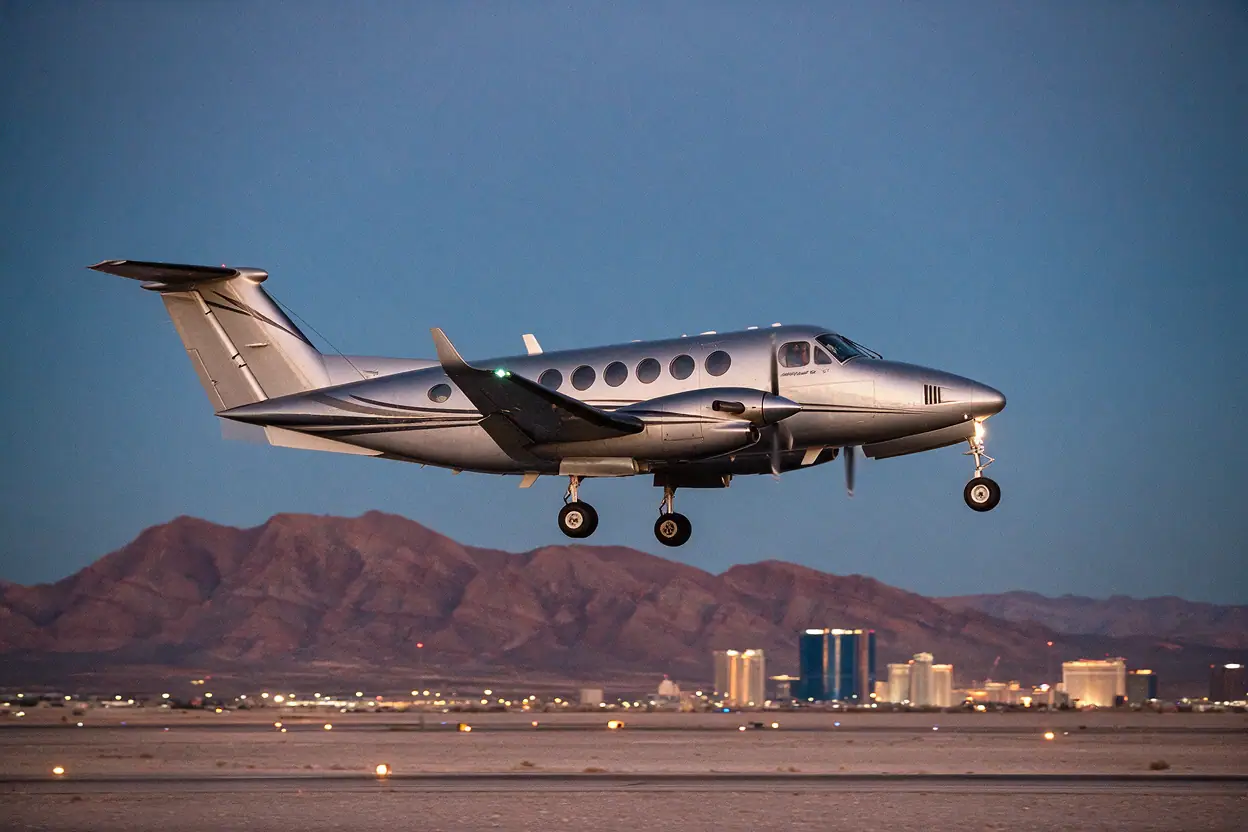
Los Angeles to Las Vegas jet charter rates by aircraft
Flying private from Los Angeles to Las Vegas takes 1h 00m over 199 nautical miles on a turboprop, with a one-way estimate of $2,200–$3,500.Five classes clear this 199 nm leg nonstop, because it is one of the shortest charter hops in the country. The gap between a turboprop and a heavy jet is close to $12,000 each way, and much of that buys cabin size rather than time. Cruise times below exclude taxi, climb and descent, so add those to your own door-to-door plan.
| Jet class | Duration | One-way est. | Remarks |
|---|---|---|---|
| Turboprop | 1h 00m | $2,200–$3,500 | Best fit |
| Light jet | 0h 47m | $4,000–$6,000 | Nonstop |
| Midsize jet | 0h 46m | $5,200–$8,000 | Nonstop |
| Super-midsize jet | 0h 45m | $7,200–$10,000 | Nonstop |
| Heavy jet | 0h 45m | $9,500–$14,500 | Nonstop |
Estimates cover the whole aircraft, not each seat, and exclude federal excise tax and segment fees. Times include taxi, climb and descent.
Los Angeles to Las Vegas: airline tickets against a private jet
The airline figures are the cheapest fares Google Flights listed for a single traveller on Dec 9, 2026 (checked Nov 15, 2026); the charter line is our estimate for the entire aircraft. For 8 travellers, airline first class seats come to roughly $1,112, versus $2,200–$3,500 for the full turboprop.
| How you fly | Carrier | Dur. | One-way est. | Each seat |
|---|---|---|---|---|
| Coach airline ticket | Frontier · nonstop | 1h 16m | $19 | $19 |
| Airline first class | Delta · nonstop | 1h 14m | $139 | $139 |
| Turboprop | Full aircraft, seats up to 8 | 1h 00m | $2,200–$3,500 | $280–$440 |
Airline ticket prices shift daily and don't cover bags above the fare allowance; the per-seat charter number presumes all seats are taken.
When prices peak on this route
Demand on this leg tracks the Las Vegas calendar more than the aviation one, and the Friday-Sunday pattern is the driver. Rates climb for the Friday evening push east and the Sunday return, and they soften on a Tuesday or Wednesday in either direction. Book the return leg with the outbound on a weekend trip, because Sunday one-way pricing is thinner.
Conventions, championship fights and big arena weekends fill the Las Vegas ramp and the aircraft that serve it. When a major event lands on your dates, so the same turboprop quote can run to the top of the $2,200 to $3,500 band and above. Race weekends and the year-end holiday stretch behave the same way.
The return logic matters more than the outbound here. Flying Los Angeles to Las Vegas on a Friday and back Sunday is a round trip priced as one booking, and it beats two one-way charters. If the schedule is loose, then a Monday morning return can save money and skip the Sunday ramp queue.
Summer afternoons bring heat and buildups over the desert, which can add a routing or a ground delay, so an early departure is safer in July and August. Winter mornings at Van Nuys or Burbank can mean a de-icing charge that a midday departure avoids. Neither is a reason to skip the trip; both are reasons to pick your hour with care.
Book ahead when the dates are fixed around an event or a holiday, since aircraft availability tightens first on the Friday and Sunday shoulders. For a midweek trip at short notice, this is one of the easier routes in the country to fill, because so many aircraft based in Southern California can make the turn. Compare quotes for private jets between Los Angeles and Las Vegas on a weekday and a weekend date, and the seasonal spread becomes obvious.
Leaving Los Angeles
Van Nuys (KVNY), Burbank (KBUR) and Los Angeles International (KLAX) are the usual departure points; the first two skip the terminal entirely. Van Nuys has the longest runway of the three at 8,001 ft, far more than this leg needs in any class. Burbank is 6,886 ft and puts the San Fernando Valley and the studios close at hand.
If you are starting near the coast, then LAX is the practical pick despite the traffic, and its 12,894 ft runway handles any aircraft on the field. Most charter passengers on this route use a private terminal rather than the main concourse, so the TSA screening line at the commercial terminals is not part of the day. Allow for rush hour on the 405 and the 101 when you set your departure time.
Arriving in Las Vegas
Harry Reid International (LAS) sits about as close to the Strip as a major airport gets, with a 14,835 ft runway, and it is the default arrival when the hotel is the destination. The fixed base operators on the field handle private arrivals separately from the commercial gates, so you step off and into a car. Landing at LAS puts you minutes from a center-Strip hotel, which matters on a 199 nm hop.
Henderson Executive (HSH) is the quieter alternative on the southeast side, with a 6,501 ft runway and less ramp congestion on a busy weekend. If your plans lean toward Lake Mead, Boulder City or the Henderson resort corridor, then HSH cuts the drive. If the first stop is a center-Strip hotel, so LAS is usually the shorter car ride. Ask which airport your quote assumes before you compare totals.
| Field | ID | Rwy |
|---|---|---|
| Harry Reid International Airport | KLAS / LAS | 14,835 ft |
| Henderson Executive Airport | KHND / HSH | 6,501 ft |
| Van Nuys Airport | KVNY / VNY | 8,001 ft |
| Hollywood Burbank/Bob Hope Airport | KBUR / BUR | 6,886 ft |
| Los Angeles International Airport | KLAX / LAX | 12,894 ft |
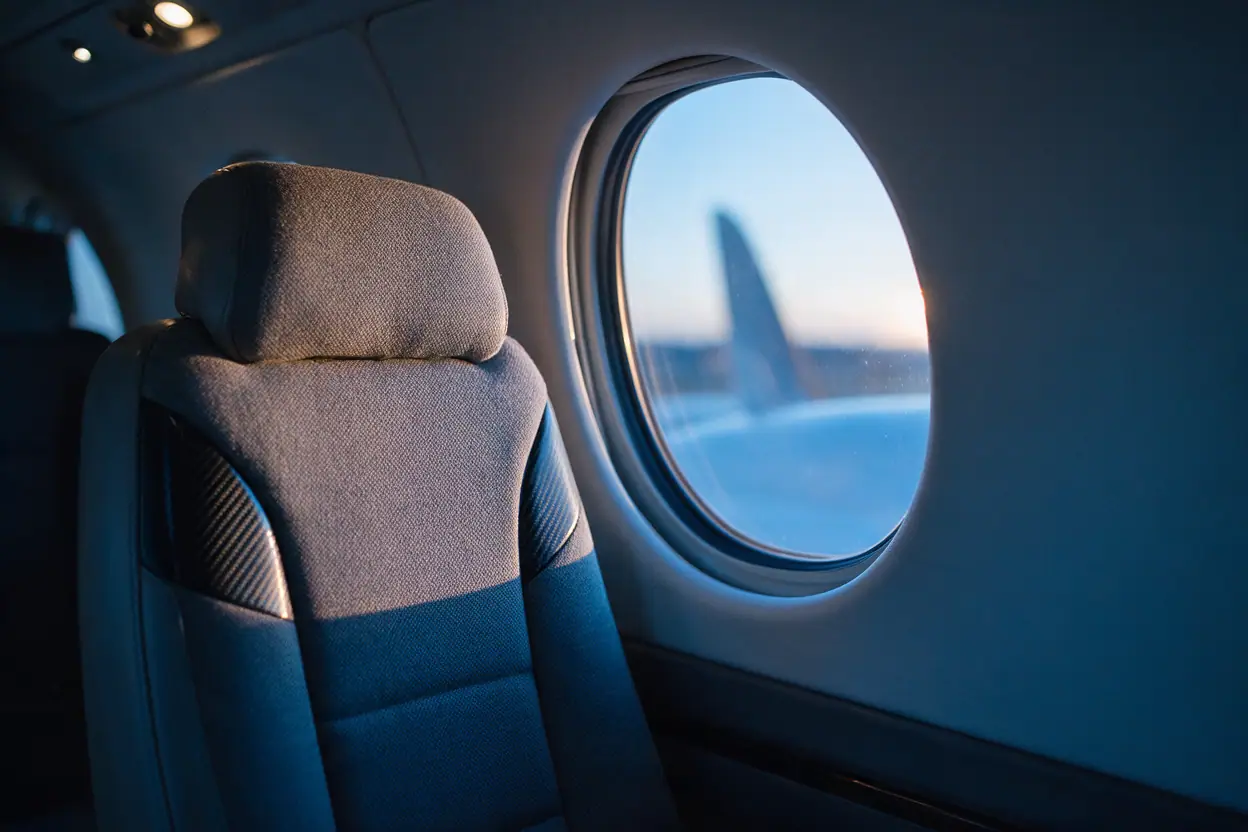
When a turboprop suits this route
A turboprop is the fit here, and it keeps the private plane cost Los Angeles to Las Vegas modest. The Daher TBM 960 seats up to 6 passengers with 32 cu ft of baggage, and the King Air 350i seats up to 8 with 55 cu ft, both giving more room than a light jet's typical club-four cabin. The hop is short enough that speed barely separates the classes: an hour in a turboprop against 47 minutes in a light jet.
A light jet at $4,000 to $6,000 buys a jet cabin and a little more cruise speed, and a midsize at $5,200 to $8,000 adds luggage room and comfort for four to six people. Super-midsize and heavy jets are listed, but on 199 nm they mostly bring cabin width and range you will not use. The money is better spent on ground transport if you land at Henderson and head to the Strip.
If your group is two or three people with carry-on bags, then the turboprop saves real money without costing much time end to end. When the trip is seven or eight travelers with golf bags and hard cases, so the King Air or a midsize becomes the sensible pick. Match the cabin to the party and the bags, not to the badge on the tail.
A word on what the quote covers. Prices here are estimates for the charter itself; landing and handling fees at Las Vegas-area airports, crew overnight charges if you keep the aircraft, and de-icing in winter can all add lines. Ask for the all-in figure before you compare two quotes side by side, because a low hourly number with fees on top is not the same as a clean total.
Daher TBM 960
Cabin 4 ft tall, 13 ft 3 in long. Baggage 32 cu ft.
- 6 pax
- 330 kt cruise
- 1,730 nm range
Beechcraft King Air 350i
Cabin 4 ft 9 in tall, 16 ft 8 in long. Baggage 55 cu ft.
- 8 pax
- 312 kt cruise
- 1,800 nm range
Other private jet city pairs like Los Angeles to Las Vegas
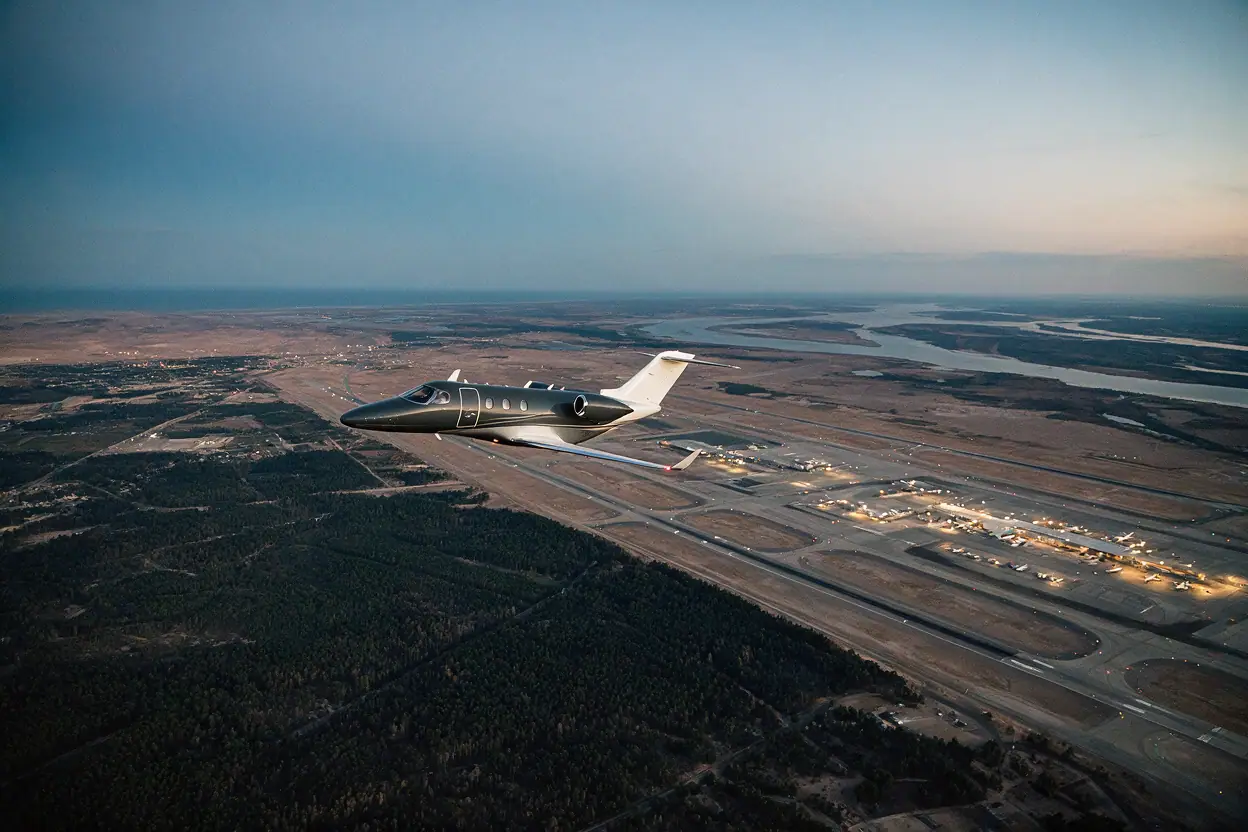
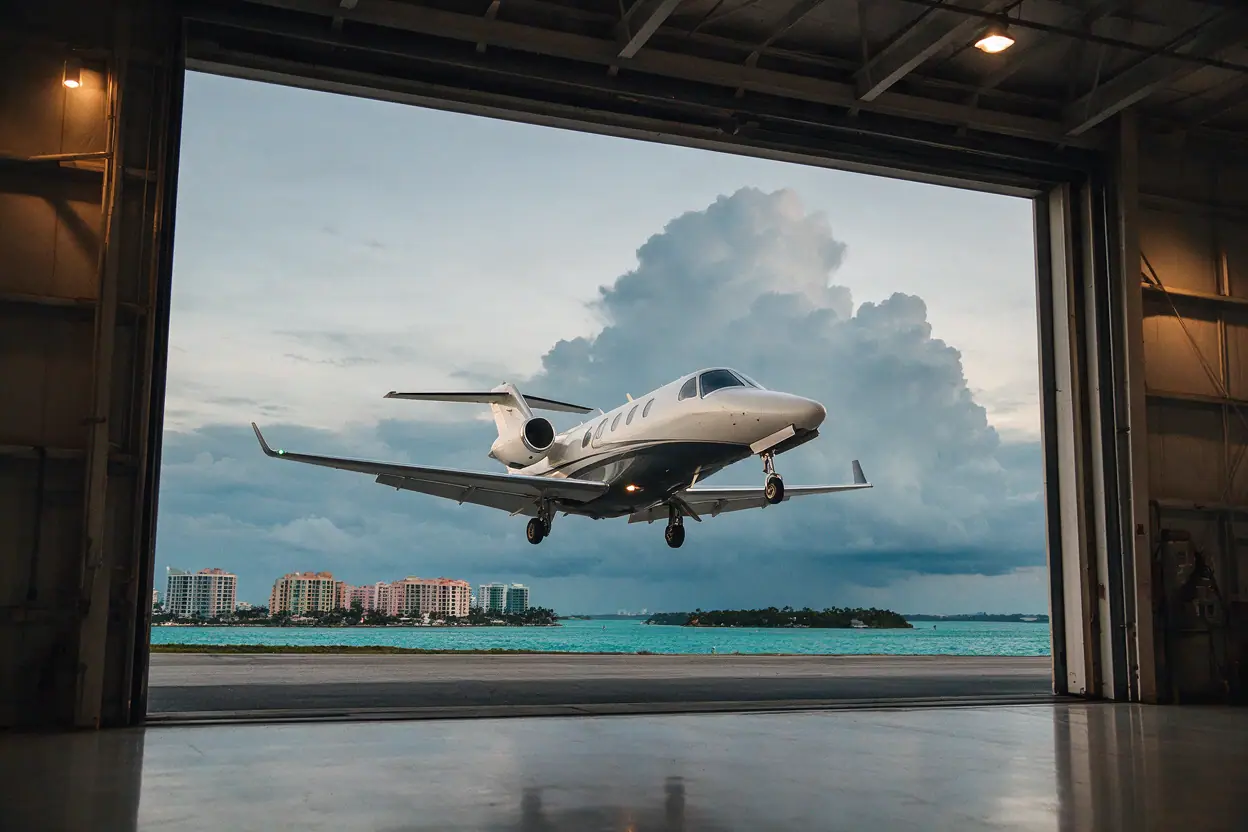
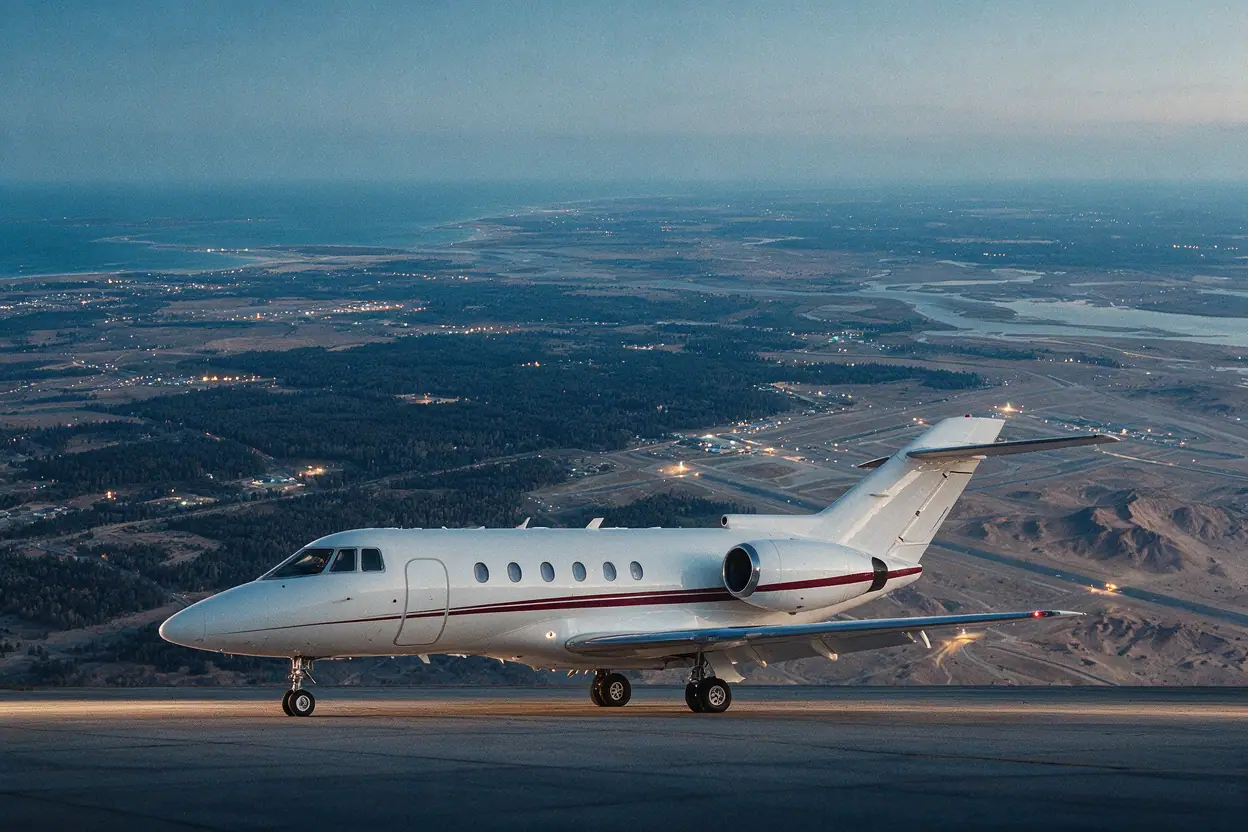
These 6 private jet routes span 96 to 1,191 nautical miles, with single-leg turboprop estimates ranging $2,200 to $15,500.
This route in question
What does a private plane cost Los Angeles to Las Vegas?
Expect roughly $2,200 to $3,500 each way in a turboprop, $4,000 to $6,000 in a light jet, and $5,200 to $8,000 in a midsize. Super-midsize runs $7,200 to $10,000 and a heavy jet $9,500 to $14,500. These are 2026 estimates for a 199 nm leg, quoted for the whole aircraft rather than per seat, and they move with the date, the aircraft and the fees.
How long is the flight from Los Angeles to Las Vegas by private plane?
About 47 minutes in a light jet, 46 in a midsize and 45 in the larger jets, with a turboprop at roughly an hour. Those are cruise times, so add taxi and climb. The 199 nm distance is short enough that the airport you choose and the traffic on the way to it matter more than the aircraft's top speed.
Which airport do private flights use in Las Vegas?
Most arrivals use Harry Reid International (LAS), whose 14,835 ft runway sits close to the Strip, or Henderson Executive (HSH) with a 6,501 ft runway on the southeast side. LAS is the shorter drive to center-Strip hotels; HSH suits Henderson, Lake Mead and Boulder City. Confirm which field your quote includes, since ground time and fees differ.
Can I fly Los Angeles to Las Vegas and back in one day?
Yes. The leg is under an hour in the air, so a morning out and an evening back is realistic in any class. Price the return with the outbound as one booking. A weekday turn is usually the least expensive version, and a Sunday return is the most expensive, so the day you pick shapes the total.
Is a turboprop or a jet better for this route?
A turboprop is the value pick at $2,200 to $3,500 each way, since the time penalty against a light jet is around 13 minutes. The TBM 960 seats up to 6 and the King Air 350i up to 8. Choose a jet when you want a jet cabin, more luggage space or a midsize cabin for a larger group.
What changes the price on this short leg?
The day and hour matter most: Friday out and Sunday back is the peak pattern, and midweek is softer. Aircraft availability on event weekends, landing and handling fees at the Las Vegas airport you use, crew overnight charges if you keep the aircraft, and winter de-icing all add lines. Ask for an all-in total before comparing quotes.
How far ahead should I book a charter to Las Vegas?
For a midweek trip, short notice is often workable because many Southern California aircraft can make this turn. For a Friday or Sunday around a convention, fight or holiday, book as soon as the dates are fixed, since those are the first slots to go. Give the operator your return time at the outset.