Private plane cost by airport
Private plane cost by airport varies with runway length, fees and summer heat. A light jet from New York to Miami runs $10,000 to $15,000. The field you choose shapes the final estimate.
- Start
- Airport info

Airport choice changes the bottom line before the aircraft type does. A field with a long runway and several FBOs gives dispatchers more room to match a jet to your schedule, while a short strip may rule out the heavy jets entirely. At Teterboro, the longest runway is 6,997 feet and the field sits 9 feet above sea level, so most light and midsize jets handle it without a second thought. At McClellan-Palomar, the runway is 4,897 feet, which narrows the list on a warm afternoon. A private plane cost by airport estimate starts with runway length and field elevation.
Summer heat is the other variable. Density altitude at Van Nuys peaks around 3,800 feet in the hottest month, enough to change takeoff performance for a fully loaded midsize jet. Pilots plan around it, but it can mean a fuel stop or a lighter cabin on a long leg. When you compare quotes, ask whether the price assumes a full cabin and standard bags. The jet charter price calculator should show the same assumptions across every airport you compare.
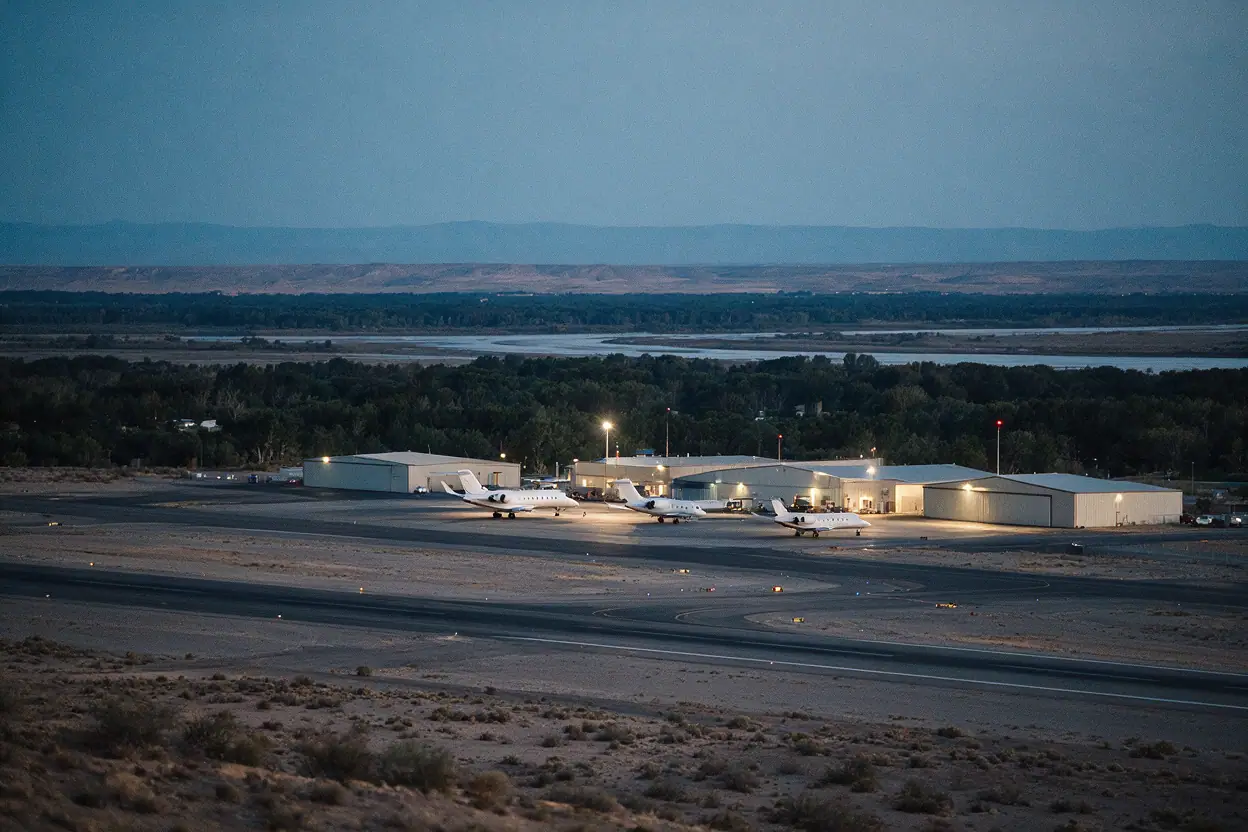
Teterboro Airport
2 runways, longest is 6,997 ft. 0 mi from New York. FBO: Jet Aviation, Signature Aviation East, Atlantic Aviation, Signature Aviation West.
- KTEB ID
- 9 ft field height

Van Nuys Airport
2 runways, longest is 8,001 ft. 0 mi from New York. FBO: Signature Aviation (West), Signature Aviation VNY North, Jet Aviation Van Nuys, The Park VNY.
- KVNY ID
- 802 ft field height

Miami-Opa Locka Executive Airport
3 runways, longest is 8,002 ft. 0 mi from New York. FBO: Atlantic Aviation, Signature Aviation, Jet Aviation, Fontainebleau Aviation.
- KOPF ID
- 8 ft field height
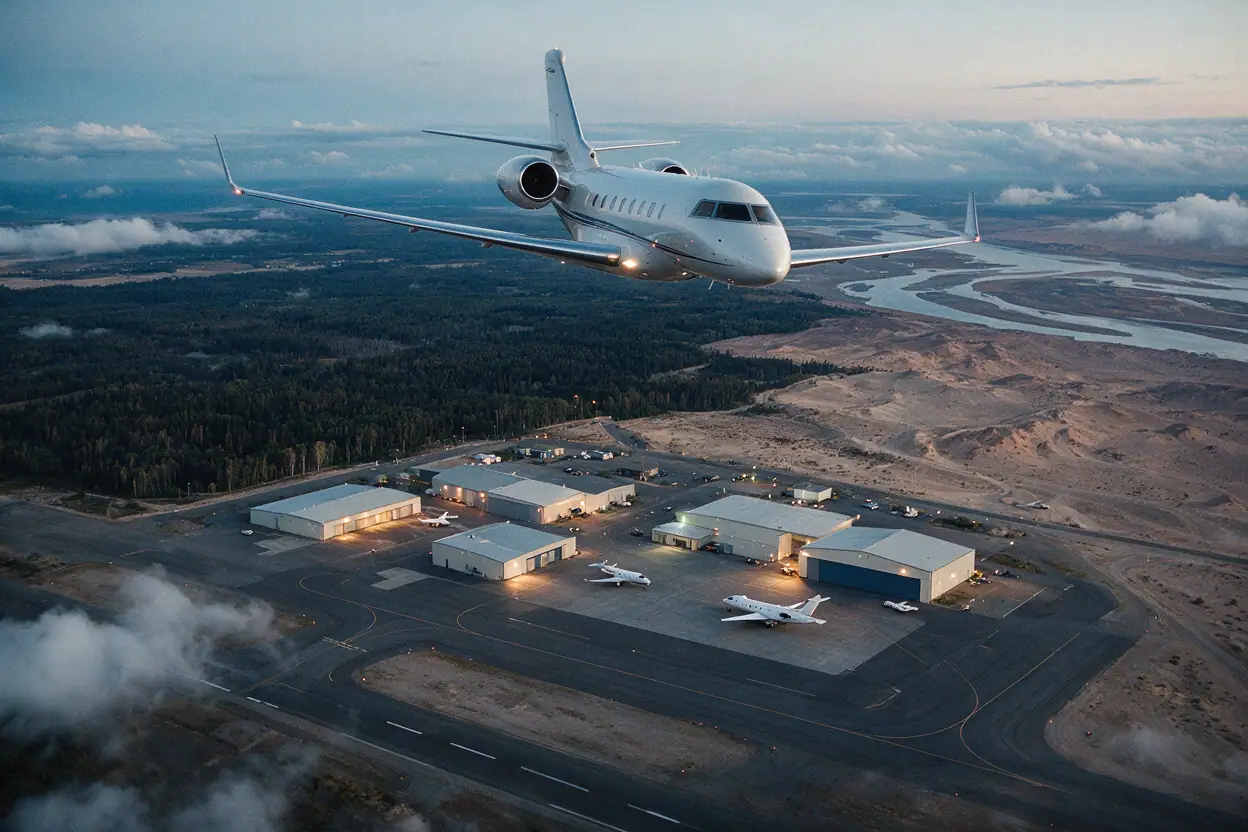
Chicago Midway International Airport
4 runways, longest is 6,522 ft. 0 mi from New York. FBO: Atlantic Aviation, Signature Aviation.
- KMDW ID
- 620 ft field height

Dallas Love Field
2 runways, longest is 8,800 ft. 0 mi from New York. FBO: Atlantic Aviation, Jet Aviation, Signature Aviation (Terminal 1 at A2), Jet Access Dallas.
- KDAL ID
- 487 ft field height
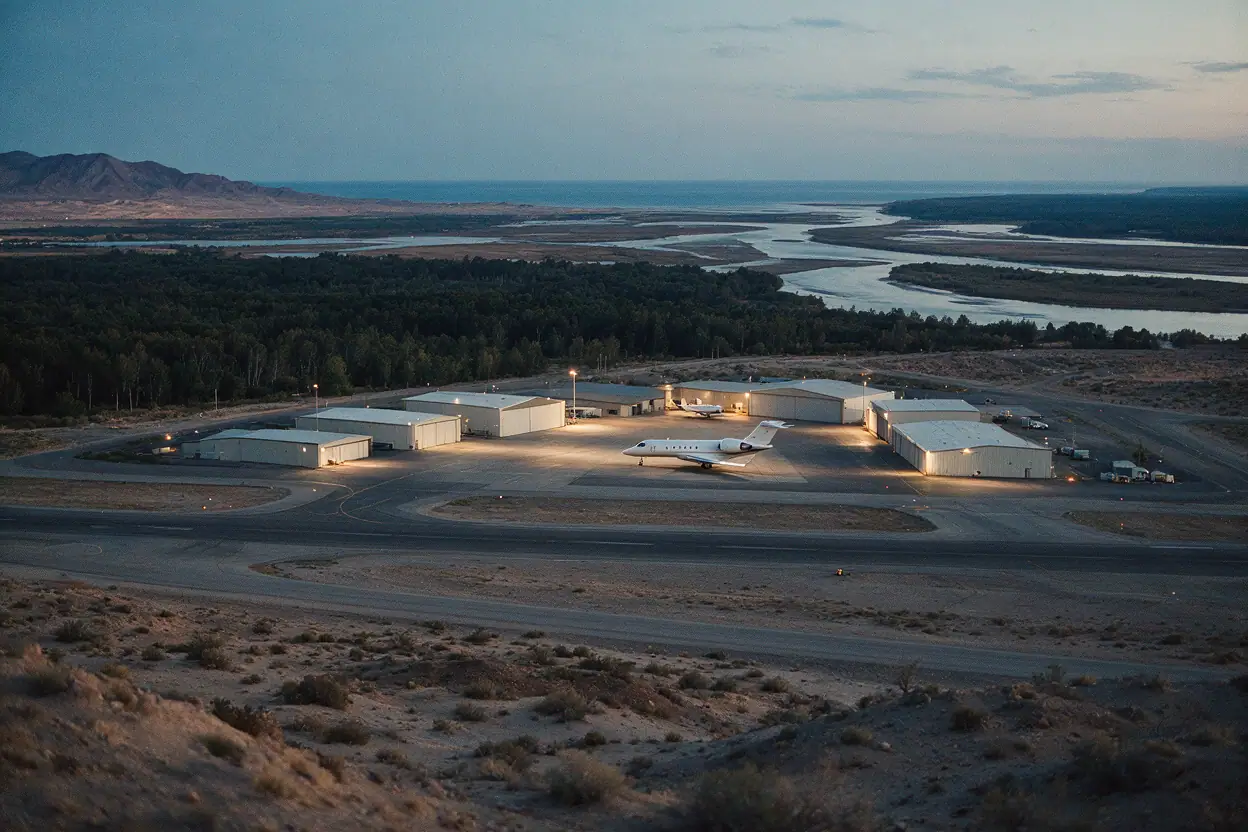
William P. Hobby Airport
3 runways, longest is 7,602 ft. 0 mi from New York. FBO: Wilson Air Center, Million Air Houston, Jet Aviation Houston, Atlantic Aviation, Signature Aviation, Henriksen Jet Center.
- KHOU ID
- 46 ft field height
Charlotte Douglas International Airport
3 runways, longest is 10,000 ft. 0 mi from New York. FBO: Pilatus Aircraft USA, Ltd.
- KCLT ID
- 748 ft field height
Austin Bergstrom International Airport
2 runways, longest is 12,250 ft. 0 mi from New York. FBO: Atlantic Aviation, Signature Aviation, Henriksen Jet Center.
- KAUS ID
- 542 ft field height
McClellan-Palomar Airport
1 runways, longest is 4,897 ft. 0 mi from New York. FBO: Atlantic Aviation, Civic Helicopters.
- KCRQ ID
- 331 ft field height
How airports change the estimate
Hourly rates range from $2,200 to $3,500 for a turboprop and $3,800 to $5,800 for a light jet, and those numbers hold across most US fields. What shifts is the total: landing fees, overnight parking and the extra flight time from a farther airport all feed the estimate. A midsize jet at $5,200 to $7,800 per hour on a two-hour leg lands in a different bracket than a light jet on the same route. The private plane cost by airport comparison is really a comparison of total trip cost, not hourly rate alone. Some airports specialize. Teterboro serves New York with four FBOs and a 6,997-foot runway, while Van Nuys pairs an 8,001-foot runway with peak density altitude near 3,800 feet. Miami-Opa Locka has an 8,002-foot runway and four FBOs, useful for international departures where CBP clearance matters. Dallas Love Field's 8,800-foot runway and Austin Bergstrom's 12,250 feet open the door to heavy jets on long legs. If your trip starts at a field with a single FBO, then expect less flexibility on parking and departure slots. At Chicago Midway, the 6,522-foot runway and two FBOs suit light and midsize jets but rarely heavy equipment.
| Field | Field elev. | Longest rwy | To New York | Jul DA |
|---|---|---|---|---|
| Teterboro Airport | 9 ft | 6,997 ft | 0 mi | 1,700 ft |
| Van Nuys Airport | 802 ft | 8,001 ft | 0 mi | 3,200 ft |
| Miami-Opa Locka Executive Airport | 8 ft | 8,002 ft | 0 mi | 1,900 ft |
| Chicago Midway International Airport | 620 ft | 6,522 ft | 0 mi | 2,300 ft |
| Dallas Love Field | 487 ft | 8,800 ft | 0 mi | 3,000 ft |
| William P. Hobby Airport | 46 ft | 7,602 ft | 0 mi | 2,200 ft |
| Charlotte Douglas International Airport | 748 ft | 10,000 ft | 0 mi | 3,100 ft |
| Austin Bergstrom International Airport | 542 ft | 12,250 ft | 0 mi | 3,100 ft |
| McClellan-Palomar Airport | 331 ft | 4,897 ft | 0 mi | 1,700 ft |
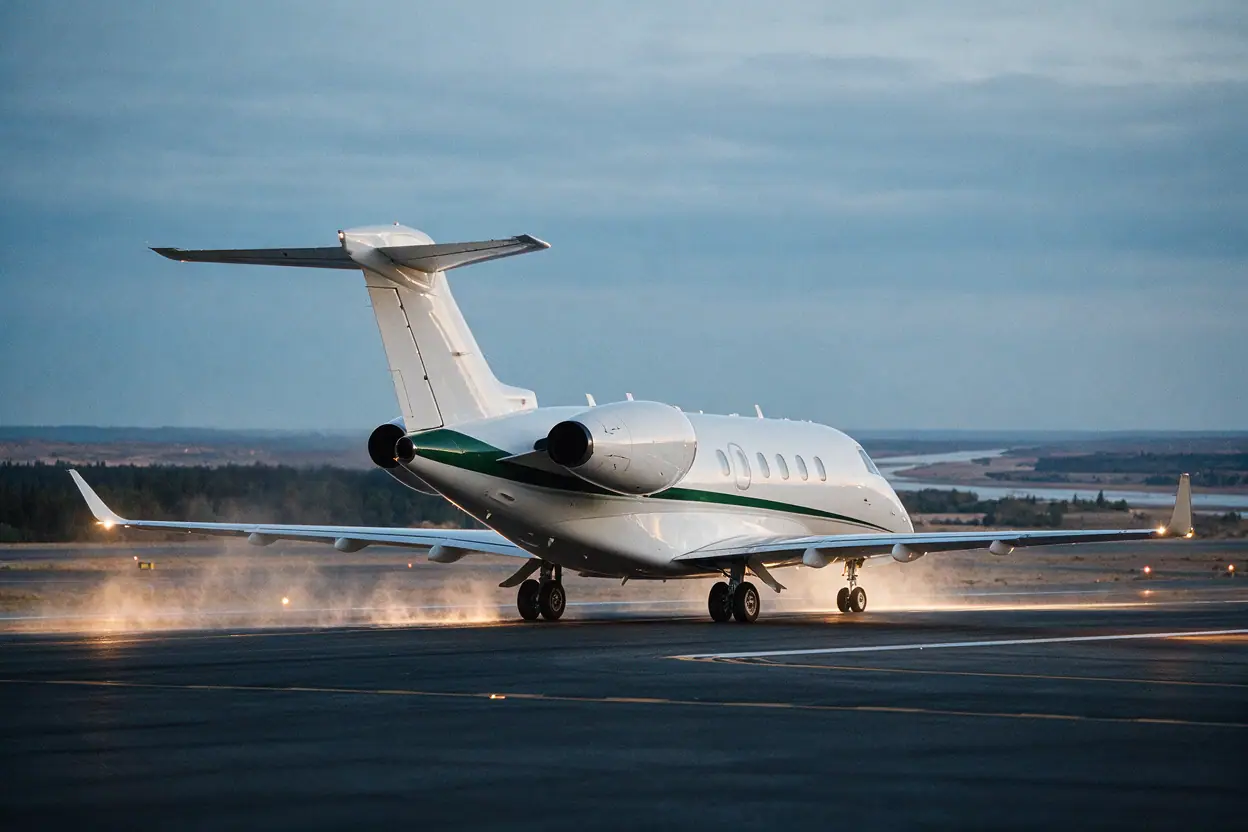
Heat, altitude and runway length
Density altitude is the number that decides whether a hot-day departure needs a lighter load. At Dallas Love Field it peaks near 3,500 feet, and at Austin Bergstrom around 3,700 feet, both driven by the hottest month's average high plus 8 F. A heavy jet with a full cabin and long-range fuel may still need a fuel stop when the mercury climbs. When density altitude rises above 3,000 feet, then plan for a payload or fuel tradeoff on smaller jets. Pilots calculate this for every departure, and a good quote reflects it.
Runway length works the same way. McClellan-Palomar's 4,897 feet is fine for light jets and turboprops but limits heavier aircraft on warm days. Houston Hobby's 7,602 feet and Charlotte Douglas's 10,000 feet give more margin. If your itinerary includes a short strip in summer, the operator may assign a turboprop instead of a jet, and the hourly rate drops to the $2,200 to $3,500 band. A private plane cost by airport estimate should flag any field where the runway or heat forces an equipment change. That is the kind of detail that separates a realistic estimate from a low one.
FAQ
Does the airport change the private plane cost by airport estimate?
Yes, mainly through fees, runway limits and positioning. A light jet runs $3,800 to $5,800 per hour, but a short runway like McClellan-Palomar's 4,897 feet may force a smaller aircraft or a fuel stop. Airports with one FBO, such as Charlotte Douglas, can also mean higher handling fees. The estimate should list each airport's fees separately so you can see what the field adds.
What does a light jet trip from New York to Miami cost in 2026?
Expect $10,000 to $15,000 for a light jet on the 949-nautical-mile route, with a flight time around 2 hours 37 minutes. Departing from Teterboro adds the convenience of four FBOs and a 6,997-foot runway close to Manhattan. Summer density altitude there peaks near 2,300 feet, so a light jet rarely needs a payload reduction. Prices are estimates and move with demand and fuel.
Which airports handle heavy jets on long domestic legs?
Fields with long runways and good hot-day performance handle heavy jets best. Austin Bergstrom's 12,250-foot runway and Charlotte Douglas's 10,000 feet are strong candidates, and Dallas Love Field's 8,800 feet works for many missions. Heavy jets cruise near 470 knots with a typical range of 4,000 nautical miles, so a coast-to-coast leg is comfortable. Check the July density altitude, which peaks at 3,700 feet at Austin.
How does summer heat affect departures from Van Nuys?
Van Nuys peaks around 3,800 feet density altitude in the hottest month, and July averages 3,200 feet. A super-midsize jet flies New York to Los Angeles nonstop in 5 hours 03 minutes, so a long eastbound leg stays nonstop too. Pilots plan for the heat, and quotes should reflect the same assumption. Booking a morning departure often avoids the worst of the afternoon heat and keeps the full payload.
What runway length do turboprops need at smaller fields?
Turboprops need less runway than jets, often 3,000 to 4,000 feet, so fields like McClellan-Palomar with 4,897 feet are comfortable. They cruise around 300 knots and carry 6-8 passengers, with hourly rates of $2,200 to $3,500. For short hops under 1,500 nautical miles, a turboprop can be the most efficient choice. Always confirm the performance for your specific departure temperature.
Do I need to clear customs at Opa Locka for international legs?
Yes, for international arrivals you clear CBP at your first US landing. Miami-Opa Locka has an 8,002-foot runway and four FBOs, making it a common choice for South Florida international departures and returns. CBP clearance adds time to your schedule, so build it into the estimate. Confirm the FBO's customs hours when you book, as they vary.